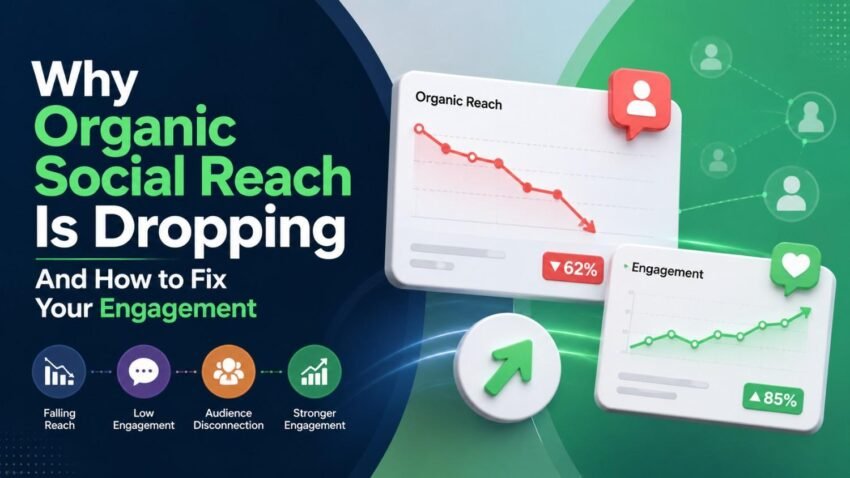
Growing a social media presence has become, more or less, harder than it used to be. A lot of businesses creators, and brands spend hours shaping useful content, but still their posts often end up with fewer views lower engagement, and a thinner spread than in earlier years. It feels kinda frustrating to publish strong work again and again and still notice the likes, comments, and shares slowly keep sliding down. And as social platforms get more crowded plus the algorithms keep changing, posting regularly by itself is not enough, not anymore, to reach your audience naturally.
Here’s the bright side though: declining organic reach doesn’t mean social media marketing has stopped working. It just means you have to adapt to those platform rules, plus the way people behave online. If you can figure out why organic reach is shrinking, and then apply smarter ways to spark interaction, you can lift your visibility, build steadier connections with your audience, and grow in a way that lasts—without having to rely completely on paid promotions. This guide covers why organic social reach is dropping, and it shares practical fixes so you can improve engagement on today’s most popular social platforms.
Understanding Organic Social Reach
Organic social reach is basically how many people catch sight of your content without using paid ads. So, whenever someone comes across your post in a natural way through their feed, profile, search, or even recommendations, that counts, yeah it adds to your organic reach. Now, even though the platforms still offer some organic visibility, the share of followers who actually see each post has been slipping over time. This happens as there s more and more competition, and as the algorithms become kind of picky, like more selective.
Why Organic Reach Has Declined
Social media platforms constantly adjust their algorithms, partly to make the user experience better and keep people hanging around for longer. And since more individuals, and businesses too, publish content every single day, platforms tend to rank the posts that create genuine engagement, not just dump every update in front of every follower.
1. Increased Content Competition
Millions of posts are published every hour across social platforms. With more content competing for limited feed space, algorithms become more selective about what users see.
How to Respond
- Publish high-quality content consistently.
- Focus on originality.
- Prioritise value over volume.
2. Algorithm Updates Prioritise Engagement
Modern algorithms reward content that generates comments, shares, saves, and meaningful conversations. Posts receiving little interaction shortly after publishing often receive less distribution.
How to Respond
- Ask engaging questions.
- Encourage discussions.
- Create shareable content.
3. Short-Form Video Dominates Feeds
Platforms increasingly favour short-form video because users spend more time watching engaging visual content. Accounts relying only on static images may experience reduced visibility.
How to Respond
- Create short educational videos.
- Repurpose existing content.
- Test video consistently.
4. Audience Behaviour Has Changed
People scroll faster than ever and interact with fewer posts. Content must capture attention almost immediately to encourage engagement.
How to Respond
- Improve opening hooks.
- Use stronger visuals.
- Keep messages clear.
5. Low Engagement Signals Reduce Visibility
When followers ignore your content, algorithms assume it is less relevant. Lower engagement often leads to reduced future reach.
How to Respond
- Publish audience-focused content.
- Monitor engagement patterns.
- Improve content relevance.
6. Inconsistent Posting
Long gaps between posts reduce audience familiarity. Consistency helps maintain visibility and audience recognition.
How to Respond
- Follow a posting schedule.
- Plan content ahead.
- Maintain quality consistently.
7. Overly Promotional Content
Constant sales messages discourage interaction. Social platforms reward educational and entertaining content more than continuous promotion.
How to Respond
- Educate before selling.
- Share useful insights.
- Balance promotional posts.
8. Weak Audience Targeting
Content that tries to appeal to everyone often connects with no one. Specific audiences engage more with specialised content.
How to Respond
- Define your niche.
- Understand audience needs.
- Solve specific problems.
9. Poor Content Variety
Publishing the same content format repeatedly reduces audience interest. Different formats keep followers engaged.
How to Respond
- Mix videos and images.
- Use carousels.
- Publish polls occasionally.
10. Ignoring Analytics
Without analysing performance, improvement becomes difficult. Data reveals what audiences actually enjoy.
How to Respond
- Review insights regularly.
- Track engagement.
- Optimise future content.
How to Increase Social Media Engagement
Improving engagement begins with understanding what your audience values most. Focus on creating helpful, informative, entertaining, or inspiring content that encourages genuine interaction rather than chasing vanity metrics.
Best Practices
- Solve audience problems.
- Share practical advice.
- Use clear visuals.
- Include strong captions.
- Encourage conversations.
Optimise Your Posting Times
Publishing when followers are most active increases the likelihood of early engagement. Initial interactions often influence how widely algorithms distribute your content.
Tips
- Study audience insights.
- Test different posting times.
- Monitor engagement trends.
Create Content Worth Saving
Saved posts signal long-term value to many social media algorithms. Educational content often receives more saves than promotional posts.
Content Ideas
- Step-by-step guides.
- Checklists.
- Tutorials.
- Industry tips.
Encourage Community Instead of Followers
Strong communities generate more conversations than passive audiences. Building relationships creates sustainable engagement.
Community Building Ideas
- Reply to comments.
- Answer questions.
- Celebrate customer success.
- Start discussions.
Repurpose High-Performing Content
Successful content rarely performs only once. Refreshing proven ideas helps maximise their value.
Repurpose Into
- Short videos.
- Infographics.
- Carousel posts.
- Blog summaries.
Improve Content Quality
High-quality content consistently outperforms average content. Every post should provide clear value.
Focus On
- Better headlines.
- Strong visuals.
- Useful information.
- Clear formatting.
Build Trust Through Consistency
Trust develops over time through reliable publishing and valuable information. Audiences engage more with creators they recognise and respect.
Build Trust By
- Staying authentic.
- Sharing expertise.
- Being transparent.
- Maintaining consistency.
Common Mistakes That Hurt Organic Reach
Many businesses unintentionally reduce their visibility through avoidable mistakes.
Avoid These Errors
- Posting without a strategy.
- Ignoring audience feedback.
- Using clickbait headlines.
- Buying fake followers.
- Publishing low-quality visuals.
- Overusing hashtags.
- Posting only promotional content.
- Ignoring comments.
- Copying competitors.
- Chasing every trend.
Future Trends in Organic Social Media
Social media continues evolving towards authentic conversations, personalised recommendations, AI-assisted content discovery, and video-first experiences. Platforms increasingly reward creators who build genuine communities instead of simply publishing large volumes of content. Businesses that focus on expertise, helpful content, transparency, and consistent engagement will be better positioned for long-term success. Rather than trying to manipulate algorithms, brands should prioritise creating content that genuinely helps their audience while adapting to new platform features as they emerge.
Action Plan to Improve Organic Reach
If your engagement has declined, focus on gradual improvements rather than dramatic changes.
Weekly Checklist
- Publish consistently.
- Create valuable content.
- Use multiple content formats.
- Engage with comments.
- Monitor analytics.
- Test new ideas.
- Optimise posting times.
- Improve visual quality.
- Encourage conversations.
- Review results regularly.
Conclusion
Declining organic social reach is messing with businesses creators and brands on almost every big platform, so it definitely feels like the organic thing is going away. But it does not fully mean organic growth is impossible, not even a little. What matters now is understanding how each social media algorithm tends to favor, the kind of stuff it thinks is useful and the interactions that feel real. If you fine tune your content strategy, post in a steadier way , and nudge people into conversations, plus you focus on genuine engagement, not just likes for the sake of it. Then visibility can still rise even if you do not depend solely on paid advertising. Long term social growth is more about earning trust, consistently giving value, and adjusting to changing audience behavior, instead of trying to outsmart the algorithms in some sneaky way.
Frequently Asked Questions
1. Why is organic social reach decreasing?
Organic reach is declining because social media platforms receive more content than ever before and prioritise posts that generate meaningful engagement, relevance, and positive user experiences.
2. Can I improve engagement without using paid ads?
Yes. Consistently creating valuable content, encouraging conversations, posting at the right times, and responding to your audience can significantly improve organic engagement over time.
3. Which type of content performs best organically?
Educational posts, short-form videos, practical tips, customer stories, behind-the-scenes content, and interactive posts generally attract stronger organic engagement than purely promotional content.
4. How often should I post on social media?
The ideal frequency depends on the platform and your audience, but maintaining a consistent schedule with high-quality content is usually more effective than posting frequently without a clear strategy.
5. How do I know if my social media strategy is working?
Monitor key performance metrics such as reach, impressions, engagement rate, saves, shares, comments, click-through rates, and follower growt