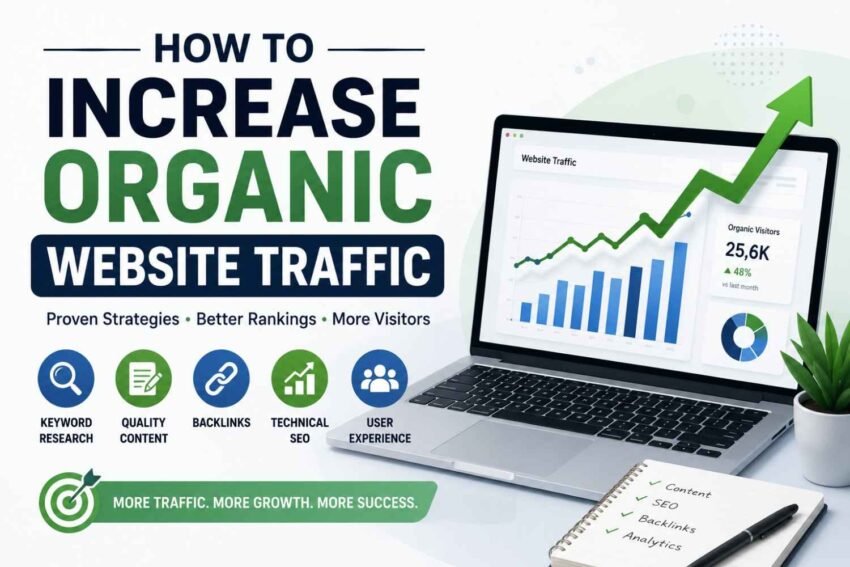
Every website owner wants more visitors, but getting the right audience in a steady way is one of the hardest parts of digital marketing. Paid advertising can bring traffic quickly, yet it usually means you keep spending, month after month. Organic website traffic works a bit different, it tends to pay off for the long run by pulling in visitors via search engines, without paying for each individual click. Businesses, bloggers, eCommerce stores, and service providers all can benefit from solid organic visibility, because it supports credibility, boosts brand recognition, and brings in better leads over time.
Still, growing organic traffic isn’t simply “post a couple of blog entries” or sprinkle a few keywords here and there. Search engines are way smarter now, they care about content quality , real user experience , site speed, authority, and topical relevance. When a website keeps putting out helpful information, genuinely answers people , and follows SEO best practices, it has a better chance of earning higher positions and traffic that keeps going.
A lot of website owners end up annoyed when results aren’t instant. Search Engine Optimization (SEO) is a longer-term plan, it needs patience, consistency, and ongoing refinement. The sites that win tend to build content that actually resolves genuine questions, while also making sure the site itself is technically sound, and easy for people to move around in.
In this detailed guide, we’ll walk through How to Increase Organic Website Traffic, with practical strategies that are proven to help improve rankings, reach the correct audience, and grow naturally, without shortcuts. Throughout this article, you’ll also find naturally integrated SEO keywords, including Search Engine Optimization, Keyword Research, Content Marketing, On-Page SEO, Technical SEO, Link Building, Google Ranking, Website Optimization, SEO Strategy, User Experience, Digital Marketing, Organic Search, SEO Content, Website Performance, and Search Visibility.
Why Organic Website Traffic Matters
Organic traffic, means people who land on your site by way of unpaid search results from engines like Google. And no it’s not like paid ads where the flow can stop the moment you stop paying, organic traffic keeps showing up long after a piece of content goes live, so it tends to be among the most cost effective digital marketing methods.
A properly optimized website also pulls in visitors who are basically looking for something right then—information, products, or services. Because of that timing they usually show stronger intent, which can lead to better engagement and more chances for conversions, even if you’re not actively pushing a campaign at that moment.
Benefits of Organic Traffic
- Builds long-term website growth.
- Reduces dependence on paid advertising.
- Increases brand credibility.
- Generates qualified visitors.
- Improves conversion opportunities.
- Supports sustainable Digital Marketing success.
Organic traffic is a long-term investment that continues delivering value over time.
1. Perform Keyword Research
Every successful SEO plan starts with keyword research. Understanding what your audience searches for helps you create content that directly answers their questions.
To do this focus on a mix of keywords, long-tail keywords and search intent. Long-tail keywords often have competition and attract very targeted visitors.
Why is keyword research important?
Choosing the keywords makes sure your content matches what users are searching for. It also helps search engines understand your pages topic and relevance.
Best practices:
- Research keywords.
- Target long-tail keywords.
- Analyze search intent.
- Study competitor keywords.
- Use related search terms.
- Update keyword research regularly.
Benefits:
- Better search visibility.
- ranking chances.
- targeted traffic.
- Improved content planning.
2. Create High-Quality Content
Content is the foundation of SEO. Search engines prioritize content that genuinely helps users solve problems or learn something Of publishing short articles filled with keywords focus on creating comprehensive content that provides practical insights.
Why quality content matters:
Helpful content encourages visitors to spend time on your website and share your articles. These positive engagement signals support search performance.
Best practices:
- Answer user questions thoroughly.
- Write content.
- Use headings.
- Include examples.
- Keep information updated.
- Focus on readability.
Benefits:
- Higher engagement.
- Better search rankings.
- Increased reader trust.
- Returning visitors.
3. Optimize Every Page with On-Page SEO
On-Page SEO helps search engines understand your content while improving the user experience. Every page should include optimized titles, meta descriptions, headings, images and internal links.
Important on-page elements:
- Title Tag Optimization: include the keyword naturally.
- Meta Description: write descriptions that summarize the page.
- Header Structure: use headings logically to organize information.
Benefits:
- Better Google understanding.
- Higher click-through rates.
- Improved user experience.
4. Focus on Search Intent
One of the SEO mistakes is targeting keywords without understanding why users search for them. Search intent generally falls into four categories: navigational commercial investigation and transactional.
Your content should match the users purpose. For example someone searching “How to Increase Organic Website Traffic” expects a guide.
Benefits:
- Better user satisfaction.
- Higher engagement.
- Improved rankings.
5. Improve Website Speed and Performance
Website performance plays a role in both SEO and user satisfaction. Visitors expect pages to load quickly. Slow websites increase bounce rates. Reduce ranking chances.
Ways to improve speed:
- Compress images.
- Minimize code.
- Enable browser caching.
Benefits:
- Better user experience.
- Higher Google rankings.
6. Build a Strong Internal Linking Structure
links help users discover additional content while helping search engines understand your website structure. Of treating every article as a separate page connect related topics naturally.
Why internal linking matters:
A strong internal linking strategy distributes authority throughout your website.
Best practices:
- Link articles.
- Use anchor text.
Benefits:
- Better crawlability.
- Improved SEO.
7. Publish Content Consistently
Publishing one excellent article isn’t enough. Search engines reward websites that consistently provide valuable information. Consistency signals that your website remains active and relevant.
Why publishing matters:
New content creates additional ranking chances.
Best practices:
- Create a calendar.
- Publish consistently.
Benefits:
- Increased search visibility.
- indexed pages.
8. Build High-Quality Backlinks
Link building remains one of the ranking factors. Backlinks from websites signal credibility and authority to search engines.
Effective link-building methods:
- Publish resources.
- Write guest articles.
Benefits:
- Higher domain authority.
- Better rankings.
9. Optimize for Mobile Users
Most internet users now browse websites on smartphones and tablets. A friendly website improves usability while supporting better Google ranking performance.
Seo best practices:
- Responsive design.
- Fast loading pages.
Benefits:
- Better user experience.
- Higher engagement.
10. Improve User Experience (UX)
Search engines increasingly evaluate how users interact with websites. A positive user experience encourages visitors to stay and explore more pages.
Ways to improve UX:
- Simple Navigation: help visitors find information quickly.
- Clear Design: use layouts.
Benefits:
- Longer visit duration.
- Better engagement.
11. Monitor SEO Performance Regularly
Successful SEO requires improvement. Tracking performance helps identify whats working and where adjustments are needed.
Metrics to monitor:
- traffic.
- Keyword rankings.
Benefits:
- Better decision-making.
- Continuous optimization.
12. Keep Content Updated
Publishing content is the beginning. Updating articles with information helps maintain relevance and search rankings.
Why content updates matter:
Search engines prefer up-to-date information.
Update checklist:
- Refresh information.
- Add sections.
Benefits:
- Better rankings.
- Higher credibility.
Common SEO Mistakes That Limit Organic Traffic
strong websites can lose rankings due to avoidable mistakes.
Mistakes to avoid:
- Keyword stuffing.
- Publishing content.
Avoiding these mistakes creates a foundation for sustainable growth.
Advanced Strategies for Long-Term Organic Growth
Once your website begins attracting traffic, advanced SEO strategies can help accelerate growth.
Advanced SEO techniques:
- Create topic clusters, around core subjects.
- Target featured snippets.
Benefits:
- Strengthen your SEO strategy.
The Future of Organic SEO
Search engines continue evolving to prioritize trustworthy and user-focused content. Businesses that invest in quality content today will be better positioned to benefit from future search engine updates.
Conclusion
Learning how to increase organic website traffic really means more than just tossing keywords onto your pages, and honestly it’s not as simple as it sounds. Sustainable growth happens when you blend keyword research, content marketing, on page SEO, technical SEO, link building, and a truly exceptional user experience into one kind of all in plan, not a single move.
Instead of chasing those quick SEO tricks that fade fast, it’s better to build a site that actually serves your audience. Keep publishing deep, high quality content, refine your site so it works well for people AND search engines, boost page speed and overall performance, and keep refreshing your pages so they stay relevant over time. Organic traffic usually takes a while to form, but once your site starts earning credibility and trust, it can turn into one of the strongest long term assets your business has.
Also, remember SEO is ongoing, not something you do once and then forget. Keep steady, watch your results, adjust to shifting search trends, and don’t stop delivering useful information. If you stick with these proven approaches, you can gradually lift your search visibility, pull in more relevant visitors, and support sustainable growth online without that constant panic.
Frequently Asked Questions
1. What is organic website traffic?
Organic website traffic refers to visitors who find your website through unpaid search engine results rather than paid advertisements. It is driven by effective Search Engine Optimization and high-quality content.
2. How long does it take to increase organic traffic?
SEO is a long-term strategy. Depending on your competition, website authority, and content quality, noticeable improvements often take 3 to 6 months, while significant growth may take longer.
3. What is the most important factor in SEO?
Creating valuable, user-focused content supported by proper Keyword Research, technical optimization, and high-quality backlinks is one of the most important factors for long-term SEO success.
4. Can I increase organic traffic without building backlinks?
Yes, you can improve rankings through excellent content and on-page optimization. However, earning high-quality backlinks significantly strengthens your website’s authority and improves long-term search performance.
5. Why is user experience important for SEO?
A positive User Experience encourages visitors to stay longer, interact with more pages, and return to your website. These engagement signals can contribute to improved search rankings and stronger organic traffic over time.